Acrocorinth Fortress — Facts
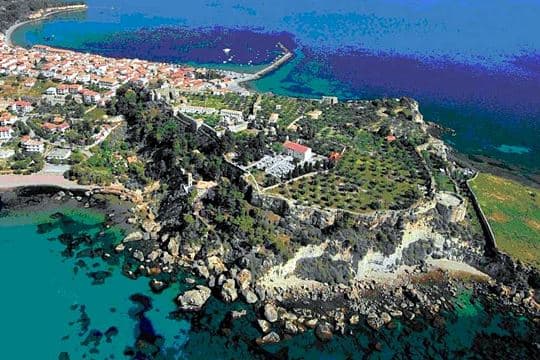
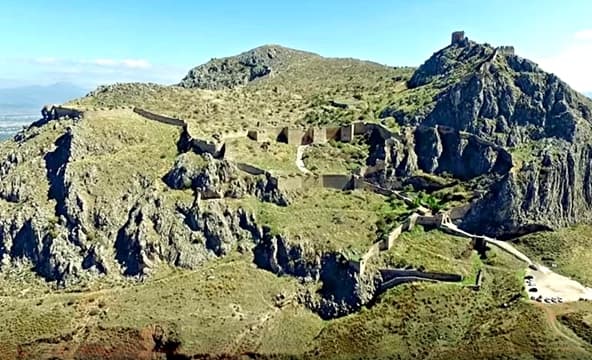
The choke-point of the Isthmus—control here meant control of movement between northern and southern Greece. The height dominates the routes to both the Saronic and Corinthian Gulfs and served as a refuge, garrison, and observation post for centuries.
Control timeline (concise)
- Classical/Hellenistic acropolis with defenses; Roman use continues.
- Byzantine fortress developed over late antique/medieval centuries.
- Frankish (Achaea): 1205–late 14th c. after the Fourth Crusade; major works.
- Ottoman: first capture 1458; garrisoned, adapted for artillery.
- Venetian (Morean War): 1687–1715 refortification and repairs.
- Ottoman return: 1715–1822.
- Greek control: from 1822 (War of Independence); later conservation.
Architecture (at a glance)
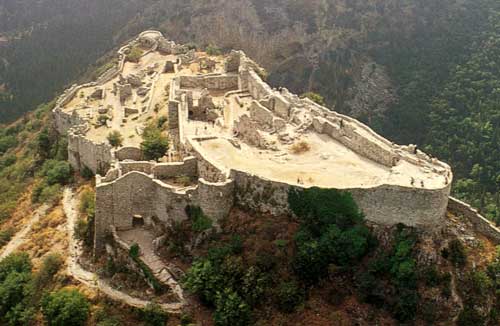
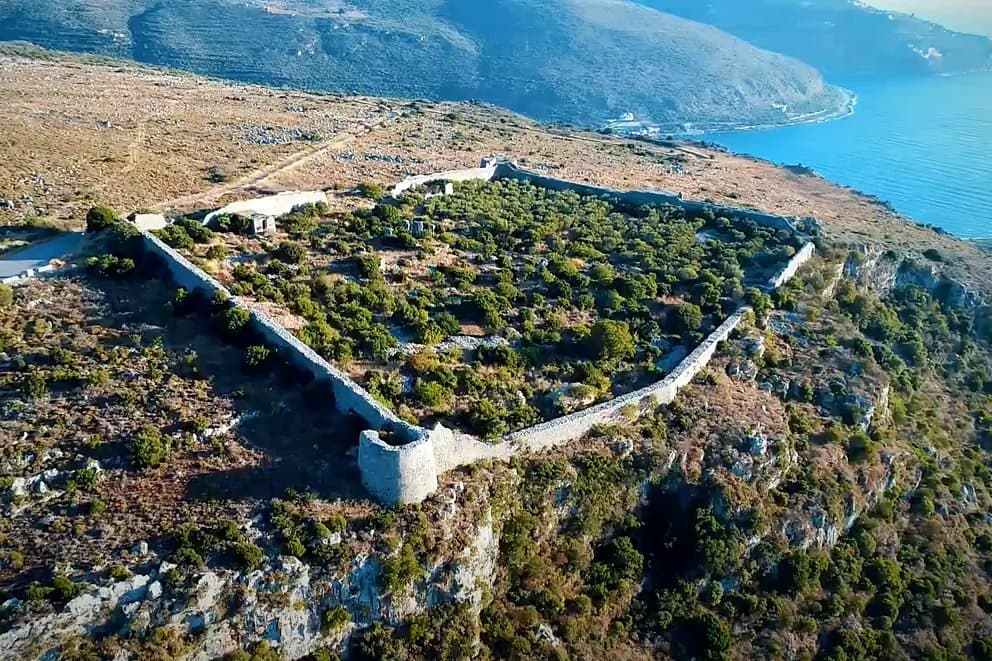
- Plan & scale: Vast hilltop enclosure with multiple defensive circuits; total perimeter spans the ridge.
- Approaches: Three successive gates on the west approach with zig-zag ramps; ditches and scarped slopes in places.
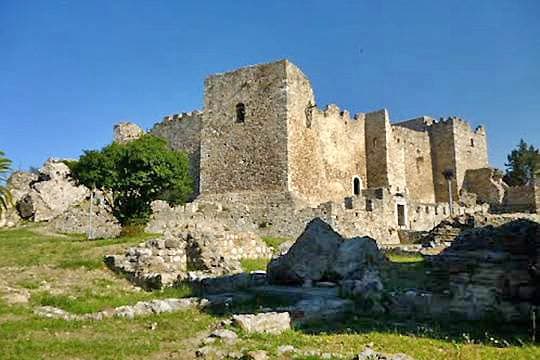
- Curtains & towers: Mixed masonry (ashlar/rubble/spolia) with medieval towers later adapted; traces of bastioned/earthen gun platforms.
- Interior features: Springs/cisterns (notably Peirene), store buildings; remains of a temple→church→mosque sequence marking changing control.
- Fabric: Readable phasing—different bonding, brick relieving arches, gunports, and patched parapets reveal Venetian/Ottoman repair lines.
Interpretation notes
- Isthmus logic: The site’s value is logistics and surveillance, not just wall thickness—water supply (springs) is decisive.
- Stratigraphy on stone: Mismatched joints, blocked embrasures, and re-cut gateways map major rebuilds across regimes.
- Artillery era: Low earthen platforms and widened parapets indicate adaptation beyond the high medieval envelope.