Kelefa Fortress
Built by the Ottomans to contain and monitor the semi-independent Maniot communities, it served as a forward base for garrisons and campaigns against local resistance.
Control timeline
- Ottoman foundation: ca. 1670s, built to subdue the Maniots.
- Venetian capture: 1685, early in the Morean War; held until 1715.
- Ottoman return: 1715–1821; garrisoned but gradually less effective against Maniot raids.
- Greek control: 1821 (War of Independence); abandoned thereafter.
Architecture (at a glance)
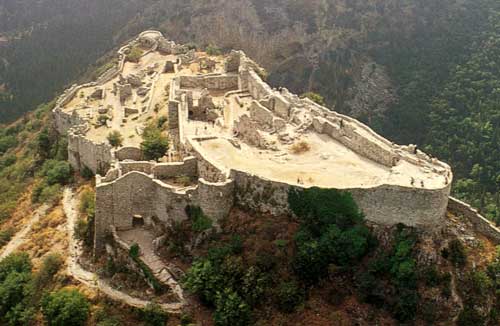
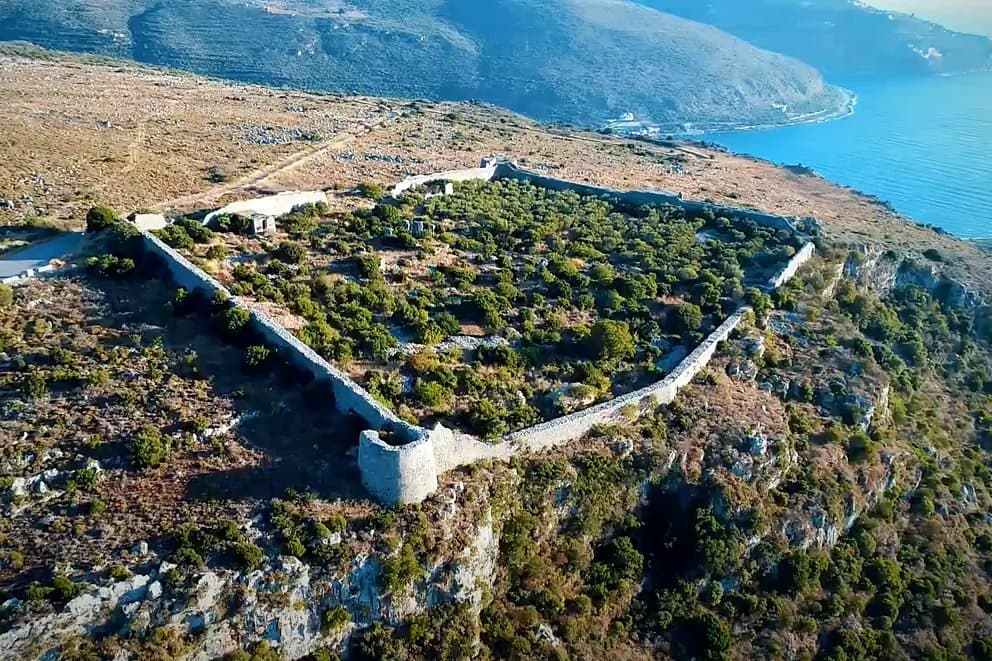
- Plan & scale: Irregular polygonal enclosure (approx. 100 × 70 m), following the hill contour.
- Curtains & towers: Thick walls with projecting round towers at corners; smaller semi-circular towers along curtains.
- Gates: Main gate with defensive angle; remains of postern gates.
- Interior features: Traces of cisterns, barracks, and small garrison quarters.
- Fabric: Rough rubble masonry with spolia; Ottoman core, Venetian repairs visible in some tower crowns and parapets.
Interpretation notes
- Frontier logic: A “containment fortress” designed less as a trade hub than as a military outpost to dominate a resistant hinterland.
- Short-lived importance: Unlike Patras or Acrocorinth, Kelefa had a narrow strategic purpose and quickly lost value once the balance of power shifted.
- Symbolic role: For Maniots, the fortress became a symbol of resistance and eventual liberation.