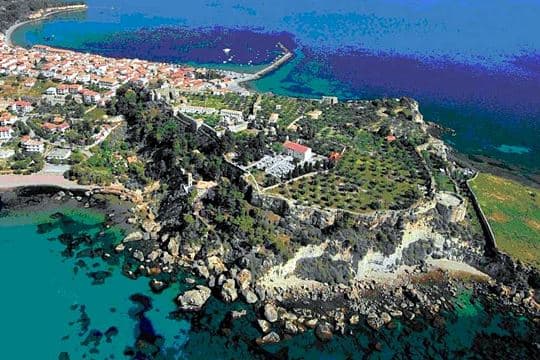
Methoni - Facts
A principal victualling and convoy stop on the route to the Levant. In Venetian usage “Modon and Coron” were the Republic’s “two eyes” guarding the Messenian approaches and the sea lanes around Cape Matapan. Brief History: Medieval nucleus → Venetian harb
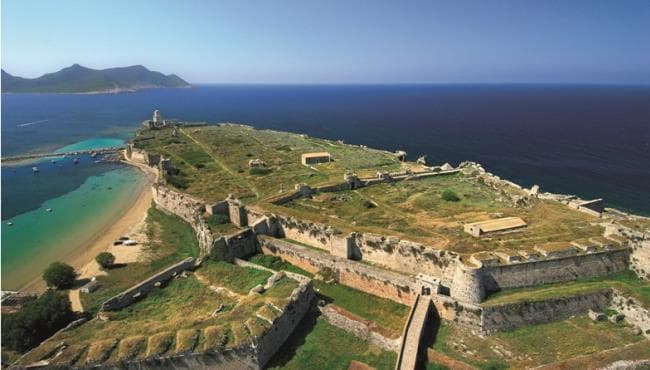
Also known as: Modon (Ital.), Methoni Castle
Location: Methoni, Messenia (Peloponnese), Greece — seaside headland at the SW tip of the Morea
Region tag: Messenian Gulf / Morea
Type: Coastal fortified town and harbor gateway
Status/Condition: Substantial enceinte and gatehouse survive; interiors partly ruinous; sea-tower (Bourtzi) preserved
Access: Open to visitors (conditions vary by season)
Control timeline (concise)
- Byzantine nucleus: medieval fortification on the headland (pre-13th c.).
- First Venetian phase: 13th–15th c. — harbor fortifications and town walling developed.
- Ottoman capture: 1500 (Second Ottoman–Venetian War) → long Ottoman holding through the 16th–17th c.
- Venetian reoccupation: 1686–1715 (Morean War period) — repairs and upgrades.
- Ottoman return: 1715–1828 — garrisoned until the Morea Expedition/Greek War of Independence.
- 19th c. onwards: French/Greek control; conservation and civilian use.
Architecture (at a glance)
- Plan & setting: Walled town on a low coastal promontory with landward ditches; seaward faces on rocky shore.
- Curtain & towers: Mixed medieval and early-modern masonry; semi-circular and polygonal bastions added/reshaped over successive phases.
- Main gate: Landmark arched gatehouse on the landward side; causeway/bridge over defensive ditch (later stone bridge replacing earlier draw solutions).
- Harbor work: Small islet Bourtzi linked by a causeway; sea-battery/tower controlling anchorage and approaches.
- Fabric: Local limestone ashlar and rubble; brick relieving arches and patchwork repair bands visible from different periods.
- Inscriptions & marks: Latin and Ottoman inscriptions survive in situ; reused spolia common in curtain repairs.
- Reading the walls: Bonding changes, blocked embrasures, and re-cut parapets mark successive Venetian/Ottoman repair lines.
- Town–harbor system: The fortress functioned with the anchorage and mole; convoy logistics, water and provisions were the strategic drivers.
- Construction Year: c. 13th–16th (major Venetian works); significant Ottoman phases: 1500–1686, 1715–1828.
- Area (sqm): —
- Tower/Bastion Count: Multiple; varies by phase
- Condition: Standing enceinte; gatehouse and sea-tower preserved; interiors partly ruinous.
- Characteristics: Coastal gateway; convoy stop; mixed Venetian–Ottoman masonry; Bourtzi sea battery.
- Location: Headland at Methoni town, Messenia; sea-level coastal site.